
So, Now You're A Journalist: Issue 3
Hello! If you’ve subscribed to this newsletter, then you know that the media industry is rapidly changing. So, Now You’re A Journalist is a once a month publication for marketers, communicators, and PR specialists who want to understand the media industry and how to tell better stories.
In this issue: We break down the studies most cited by public relations thought leaders on LLM visibility; a new survey tells us how Americans are getting their news; and a guest post from an affiliate marketing expert on how his industry is changing. Plus, a veteran TV journalist shares the biggest misconception people have about how newsrooms operate today.
Here we go!
MEDIA & NEWS LITERACY
How Do You Get Cited in an AI Answer? The research is more complicated than what you're hearing
Spend more than a minute in LinkedIn public relations thought leader spaces and you'll see growing enthusiasm for the importance earned media plays in AI visibility. PR professionals have been quick to cite exciting figures such as "84% of cited sources come from earned media." What those industry pros don't always share is that nearly every major study shaping how communications professionals think about AI visibility was produced by a company selling a product to solve the problem the study describes. Further complicating the matter is the reality that none of the major AI platforms (ChatGPT, Perplexity, Gemini, or Claude) release data on what users are searching for inside their systems.
Cara Corbett, Partner Growth Manager at SUSO Digital, has reviewed several top cited AI visibility studies. "All of these studies are based on synthetic prompts," she says. "We can't make any definitive conclusions from this data. We can only use this directionally, provided the methodology is sound and unbiased, which we also need to scrutinize when it comes to who is putting out this research." This doesn’t discredit the research, but it shows how this is still a developing space and that more studies are needed.
The Most Cited Study in PR
Muck Rack — "What Is AI Reading?" Third edition: May 2026
Sample | 25 million links across ChatGPT, Claude, and Gemini; 17 industries; 3 editions since July 2025 |
Methodology | Disclosed; consistent across three editions |
Conflict of interest | Direct. Muck Rack sells Generative Pulse, built around these findings |
Key finding | Earned media accounts for 84% of AI citations; paid and advertorial content accounts for 0.3% |
Muck Rack's "What Is AI Reading?" report, now in its third edition, is easily the most frequently referenced study in the PR space. This report is where the heavily cited “earned media accounts for 84% of AI citations” statistic comes from.
That finding has held across three editions since July 2025, but Corbett says that 84% figure should be approached with scrutiny. "If you look at the breakdown of what they have categorized as earned, you'll see it doesn't always entirely fall into the typical purview of PR professionals. It also includes government and NGO sources, encyclopedic sites like Wikipedia, social platforms, and third-party corporate content," she said. Corbett concludes, "I feel as though this statistic is somewhat inflated to suit a narrative that supports Muck Rack's Generative Pulse product.” Muck Rack sells Generative Pulse, a monitoring tool built specifically around these findings.
Muck Rack’s VP of Communications, Linda Zebian, explains the results aren’t inflated and are a reflection of how the PR function actually operates today. “Muck Rack defines earned media as a superset that includes journalism, academic research, social, and third-party corporate content--a definition stated publicly by the report's authors. Every time the earned media figure appears, it is shown alongside the full source-type breakdown,” Zebian says. This definition matches a modern PR workflow that has evolved beyond traditional media relations into hybrid communications, content, and brand function. She referenced numerous industry data studies showing that today’s PR teams are heavily involved in content creation, owned media, influencer marketing, and social strategy.
The Muck Rack study also found that Axios is the top-cited journalism outlet in ChatGPT. In January 2025, OpenAI and Axios announced a formal content partnership under which, according to OpenAI's own announcement, "ChatGPT will use Axios journalism to answer user queries with attributed summaries, quotes, and links to Axios stories." OpenAI simultaneously funded the expansion of several Axios Local newsrooms.
The Axios partnership is not an isolated case. Jessica Michael, founder of Jessica Michael Public Relations, says the licensing dynamic has direct implications for how publicists pitch. "Publicists need to become versed in how AI cites sources," she explains. "Media outlets that have AI licensing agreements, like News Corp and The Associated Press, are prioritized in citations, as is original content such as exclusives. It's important to pitch outlets and journalists who are getting cited in summaries to be sure the resultant stories will get picked up by AI search engines."
The study’s findings also affirm ongoing rhetoric among publicists that public relations is an ongoing commitment, rather than a one-and-done campaign. The study found that more than half of journalism citations come from articles published within the past 12 months. The volume of citations drops sharply after six months. “In many ways, GEO rewards the organizations already doing the fundamentals well: clear messaging, trusted media coverage, authoritative content, and a distinct point of view,” says Jenn DeBarge Goonan, founder of JAG Communications. “The brands and leaders who understand this early will have a major advantage in awareness, trust, and discoverability.”
The enthusiasm around the Muck Rack findings is understandable. But even though the company is transparent about their methodology, the 84% figure that circulates in agency pitch decks and thought leader LinkedIn posts is rarely accompanied by the full breakdown Muck Rack publishes. Read the full Muck Rack study here.
The One Independent Study
Princeton — "GEO: Generative Engine Optimization" KDD 2024 — August 2024
Sample | 10,000 queries across 10 generative search engines |
Methodology | Peer-reviewed; fully disclosed; replicable |
Conflict of interest | None identified |
Key finding | Adding statistics, citations, and quotations to content can boost AI visibility by up to 40% |
The only peer-reviewed, independently funded study that seems heavily cited by online thought leaders was published in August 2024 by researchers at Princeton University, Georgia Tech, and IIT Delhi. The team ran 10,000 queries across 10 generative search engines and tested six content modification strategies. This is the report that coined the term “generative engine optimization.”
“Given the black-box and fast-moving nature of generative engines, content creators have little to no control over when and how their content is displayed,” the report states. It continues, “To address this, we introduce Generative Engine Optimization (GEO), the first novel paradigm to aid content creators in improving their content visibility in generative engine responses through a flexible black-box optimization framework for optimizing and defining visibility metrics.”
The findings revealed that adding statistics to a page improved AI visibility by 40%. Adding quotations improved it by at least 28%, often more depending on the metric and domain. Citing external sources improved visibility by more than 100% for some lower-ranked content. Results also varied significantly by industry, suggesting that no universal formula exists, a caveat that tends to get dropped by thought leaders.
For communications practitioners, the findings point toward something broader than content tactics. "GEO is changing communications the same way SEO changed marketing, except faster," says DeBarge Goonan, who has closely tracked the AI SEO to GEO evolution. "Visibility is no longer just about ranking on page one. It's about becoming a credible source AI chooses to reference, summarize, and recommend."
DeBarge Goonan says the ripple effects touch the fundamentals for building trust that identified in the Princeton research. "Clear positioning matters more than ever. Strong owned content and earned media now work together. Thought leadership, credibility, and consistency are becoming AI signals. If your organization is invisible online or unclear in its messaging, AI may skip over you entirely," she explains.
The biggest caveat with the Princeton study is that the research was conducted on the AI landscape in late 2023. The models tested have since been substantially updated, which is something practitioners should take this into consideration. Even so, this research is easily the first major example of how AI search has changed both the PR and SEO landscape. Read the full Princeton report here.
The SEO Gap
Ahrefs — AI Citation Studies July 2025 and March 2026
Sample | July 2025: 17 million URLs across 7 AI platforms; March 2026: 863,000 SERPs and 4 million AI Overview URLs |
Methodology | Disclosed; July 2025 study by Ryan Law; March 2026 study by Louise Linehan and Xibeijia Guan |
Conflict of interest | Indirect. Ahrefs sells Brand Radar, the tool used to collect the data |
Key finding | The gap between SEO rankings and AI citations is real and widening; only 38% of AI Overview citations now come from Google's top 10, down from 76% in July 2025 |
Thought leaders out to prove “SEO and AI visibility are not the same thing” often reference studies conducted by Ahrefs. In July 2025, Ahrefs analyzed nearly 17 million URLs across seven AI platforms and found that only about 12% of content cited by those platforms matched Google's top search results for the same queries. That figure has become the most-cited data point in arguments that “SEO is dead.”
A separate Ahrefs study published in March 2026 found that even within Google's own AI Overviews feature, citations from Google's top 10 results had dropped from 76% to 38% in less than a year.
However, that doesn’t mean SEO is dead. The reason for this, according to Corbett, is that many AI tools pull from Google's index when they don't already have an answer. "When they don't have the information within their training data, they will go out to the web — often times it's Google — to ground their responses," she said. "In my opinion, this is the strongest case for why SEO is still the foundation of any GEO campaign."
The study also found AI-cited content was nearly a year fresher than content appearing in traditional Google search results.
It is important to know that Ahrefs built Brand Radar, the tool used to collect this data, specifically to track AI citation behavior, which once again is something practitioners should take into account when strategizing their content campaigns. Read the full Ahrefs study here.
KNO / GR0 — "The 2026 AI Attribution Report" Early 2026
Sample | Millions of post-purchase survey responses across 6,000+ Shopify brands; January–February 2026 |
Methodology | Real consumer survey responses, not synthetic prompts |
Conflict of interest | Direct. KNO sells post-purchase survey software; GR0 sells digital marketing services |
Key finding | AI/ChatGPT as a discovery channel grew 1,150% in 2025; the only channel in hypergrowth |
When the KNO/GR0 report started circulating in early 2026, one number dominated the conversation: 1,150%. That's how much AI-attributed product discovery grew in a single year, according to data pulled from post-purchase surveys of ecommerce transactions.
KNO asked customers across more than 6,000 Shopify brands: "Where did you first hear about us?" Responses crediting ChatGPT or AI grew from roughly 400 to more than 5,000 across 2025. Angie Bergmann, Director of SEO and AI Search at GR0, put it plainly in the report: "The numbers are still relatively small, but it's a thousand percent higher. I've seen 8,000% more revenue from LLMs this January compared to last January."
Shopify President Harley Finkelstein framed the behavioral shift as consumers turning to AI the way they might turn to a personal shopper, someone who understands their preferences and taste, rather than running a traditional search.
The report also mentions one catch that most thought leaders skip over when referencing PR and LLM visibility: when a customer finds a brand through AI and later buys, that sale almost never gets credited to AI in standard analytics. It shows up as direct traffic, branded search, or paid retargeting, wherever the customer ended up last. “Part of our job as publicists is to educate them on how citations are sourced by AI and how important scoops, exclusives, and original content have become,” says Michael as she explains the impact LLM has had on the PR industry.
Like other studies, this one comes with a couple of caveats: the KNO/GR0 report covers Shopify e-commerce only, so B2B and service industries should apply the findings cautiously. Also, both KNO and GR0 have a direct interest in AI visibility data. Read the full report here. Read the full KNO/GR0 report here.
What Google Says About Its Own AI Features
In May 2026, Google weighed in on the AI visibility and GEO vs SEO discussion. From Google's perspective, optimizing for its generative AI features, including AI Overviews and AI Mode, is still SEO. Both are built on the same core Search index, meaning the signals that determine what ranks in Google Search also influence what surfaces in Google's AI answers.
The guidance also did something not seen in the vendor studies referenced in this piece: it named specific tactics practitioners can stop worrying about — things like rewriting content specifically for AI systems or “content chunking” for AI comprehension. Google called each of these ineffective or unsupported by how its systems actually work. Of course, Google itself is not a neutral party. The company has a direct commercial interest in PR and SEO teams continuing to invest in Google Search SEO rather than building strategies around other platforms. Its guidance covers Google's AI products only and says nothing about what drives visibility anywhere else.
What the Research Agrees On
Across every study examined here, a few findings hold regardless of who funded the research. AI visibility and SEO are related but not the same thing, and both need strategic attention. The relationship between them is more intertwined than the "SEO is dead" narrative suggests.
Both the Muck Rack and Ahrefs data suggest media placements don’t hold its value in AI visibility the way it might in traditional metrics. Newer content shows up and gets credited more than old press features, and showing up in just a couple of random news sites is not enough. Every platform is unique and brand authority built consistently across multiple surfaces over time pays off.
"PR is absolutely a necessary part of any GEO campaign, as it builds the trusted, consistent narratives that AI tools rely on," Corbett says. "That being said, if we get more unbiased data, it's clear that it's not the only factor at play." Jessica Michael, founder of Jessica Michael Public Relations, says it plainly. "Reputation building has become the new SEO," she said. "AI-powered summaries and search results mean that companies will rise or fall, become visible or lose relevance, based on sustained and consistent press buzz. AI citations are the new backlinks."
FOUNDER'S TAKE Amanda Green, InYourVoice MediaWorks
The research in this piece confirms something I've been telling clients for years: no single channel owns your story.
The brands showing up consistently aren't the ones who found the perfect tactic. They're the ones who showed up consistently, across multiple surfaces, over time. They’re practicing good editorial discipline.
This research is proof as to why you need to start thinking about cohesive storytelling as something that extends across all channels. If your content lives in one place, it reaches one audience. And in 2026, that’s not enough.
The newsroom model I work from starts with a simple premise: one story, easily optimized for multiple channels. A single piece of reported content becomes a newsletter, a pitch, a byline, a social post, a source for someone else's story (PR outreach). You’re not publishing for the sake of volume, but because each surface builds a different layer of credibility, with a different audience, through a different channel.
We aren’t reinventing something here. We’re just bringing to brands what journalistic newsrooms have been doing for decades.
Amanda Green is the founder of InYourVoice MediaWorks and creator of the Newsroom Narrative System. Learn more at inyourvoicemediaworks.com.
THE BUSINESS OF MEDIA
More Than a Third of Americans now Get Local News from Social Media Creators, Survey Finds
More than a third of Americans (36%) say they get local news from individuals with large social media followings who regularly post about news and community topics, according to a survey released in April by the Pew Research Center. This is the first time the organization has measured the role of “news influencers” in local news consumption.
The finding comes as Americans' engagement with traditional local news continues to decline. The share of Americans who follow local news very closely has fallen to 21% in 2025, down from 37% in 2016, the lowest level in nearly a decade. Online-only news sources have more than doubled in use since 2018, rising from 15% to 42% of U.S. adults, while community forums such as neighborhood Facebook groups and Nextdoor are now used by more than half (52%) of Americans for local news.
Yet Americans have not abandoned their belief in local journalism's value. Eight in 10 U.S. adults say local news outlets are at least somewhat important to the well-being of their community, even as the share calling them extremely or very important dropped by about 10% from the previous year.
The findings are drawn from surveys of U.S. adults conducted in August and December 2025 as part of the Pew-Knight Initiative.
From the Web
EDITORIAL MEETS MARKETING
Editor's note: PR in 2026 means earning attention without waiting for a journalist to return your pitch, and Luiggi Pera has built a system that does exactly that.
The New Public Relations Has a Commission Rate
Guest Post - Written by Luiggi Pera
Last week a $4 million Shopify brand showed me a spreadsheet with 600 manually tracked UTM links on it and told me they had an affiliate program.
They didn't. They had a part-time job no one signed up for.
This is more common than most founders want to admit. The idea is sound, turn customers and creators into a growth channel. But then execution collapses into spreadsheets, flat commissions, and forgotten follow ups. The program exists in name only. Meanwhile, brands running these programs well are generating 10-30% of their total revenue through them.
For communicators, the implications go well beyond sales. These brands have built a trust infrastructure that earns attention the way journalism always has: through credible voices people already believe.
Why most affiliate programs fail
Most affiliate programs fail for the same reasons. Attribution falls apart the moment you have more than five partners. Top performers and bottom performers sit on the same flat commission, so neither has a reason to push harder. Referral prompts arrive days after purchase, long after the moment has passed. And perhaps most damaging: referral, ambassador, and influencer get treated as one program, when they serve three entirely different audiences with three entirely different motivations. One commission structure cannot serve them all.
In communications terms, this is the equivalent of pitching every journalist the same story in the same way. It doesn't work there either.
If that sounds familiar, you don't have an affiliate program. You have a leak.
Timing is the name of the game
83% of satisfied customers say they'd refer a brand they love. Only 29% ever do. Loyalty isn’t the problem here. It's a storytelling problem. The brand isn't giving its most enthusiastic advocates a mechanism or reason to speak.
A referral prompt that arrives in a follow-up email is too late. The right moment is the thank you page, sent thirty seconds after the transaction closes, when enthusiasm peaks. Brands that make this single change see share rates jump from roughly 4-12%.
Keep the offer simple: give 10%, get 10%. Referred customers convert three to five times more often, spend 25% more on their first order, and churn 18% less over time.
Average acquisition cost through referrals runs $15 to $25. Through paid search, it costs closer to $50 to $75, and there’s no guarantee those clicks will turn into customers.
Dropbox built 60% of its early user base through referrals. Airbnb attributes a quarter of its new user growth to a similar program. Neither outcome happened by accident. Both are also case studies in what happens when you treat your existing audience as your most valuable distribution channel, which is what great editors have always done.
Activate the advocates already in your ecosystem
Every brand has customers who evangelize without being asked. These people are posting, tagging, and texting friends when their favorite items sell out. In PR terms, these are your best sources. They're credible, they're motivated, and they're already telling your story. An ambassador program doesn't have to manufacture that credibility, it simply organizes it.
Flat commissions don’t feed motivation. You need a dynamic tiers that pay more as you sell more. You need tiers that pay more as performance grows: 10 percent on the first $1,000 in sales, 15 percent to $5,000, 20 percent plus a quarterly bonus beyond that. Your most active monthly buyers, the people already posting about your product, are your best recruits. They convert faster than cold creators because they actually use the product.
ROI on well-run ambassador programs typically runs three to five times investment. Top performers reach ten times or higher. The metrics worth watching: activation rate in the first 30 days, average commission per ambassador per month, and revenue concentration. Healthy programs see 30-50% of revenue coming from the top 10% of ambassadors.
Performance over reach
The conventional influencer model is a media buy dressed up as marketing. Brands pay for access to an audience and hope some percentage converts. Any communications professional who has watched a high-circulation press hit produce zero response will recognize the problem immediately. It’s not always about reach.
That requires two things: custom commissions per creator, not per program, and individual storefronts that track performance at the source.
A creator with 50,000 followers converting at 4% is worth more than one with 500,000 converting at 0.3%. Micro-influencers generate engagement rates of 3.86% against 1.21% for mega-influencers, at 60% lower cost per post. 86% of consumers make at least one influencer-inspired purchase per year. And 91% of brands using influencer marketing say creator content drives more ROI than traditional digital ads.
Sephora, Amazon, and Walmart have all moved toward the storefront model. TikTok Shop brand adoption doubled year over year.
Side-by-side: which program does what
Referral | Ambassador | Influencer | |
Who it targets | Every customer | Top buyers and career affiliates | Creators with audiences |
How they're recruited | Auto-enrolled at checkout | Application or invitation from purchase data | Outbound or inbound application |
Typical commission | 10% (give 10%, get 10%) | 10% to 20% tiered | 5% to 30% custom per creator |
Primary KPI | Share rate and referral revenue share | Activation rate and revenue per ambassador | Conversion rate per storefront |
When to launch | Day 1. Highest-leverage program you can run. | Once you have 500+ customers to identify advocates | Once you have margin for 15%+ commissions and a story creators want to tell |
The commission-only argument
Run all three programs on a commission-only basis and the cost structure inverts entirely. You don't pay for a referral that doesn't close. You don't pay an ambassador who never sells. You don't pay an influencer who can't move product. Compare that to paid search at $50 to $75 per acquisition with no conversion guarantee, or paid social where attribution is increasingly unreliable.
The infrastructure to run all three at scale with automated attribution, tiered payouts, fraud controls, adn more now exists off the shelf. The spreadsheet era is over.
The most credible spokespeople for any brand or organization are already in your ecosystem. They bought the product, attended the event, volunteered for the cause, or donated to the mission. The brands getting this right aren't waiting for a journalist to tell their story. They've built a system that tells it for them, and pays the people doing the telling.
Luiggi Pera is the founder and CEO of Jump, a social commerce platform where every customer can open a personal shop and earn commissions on curated brands. Learn more at myjumpshop.com.
INTERVIEWS & CONVERSATIONS
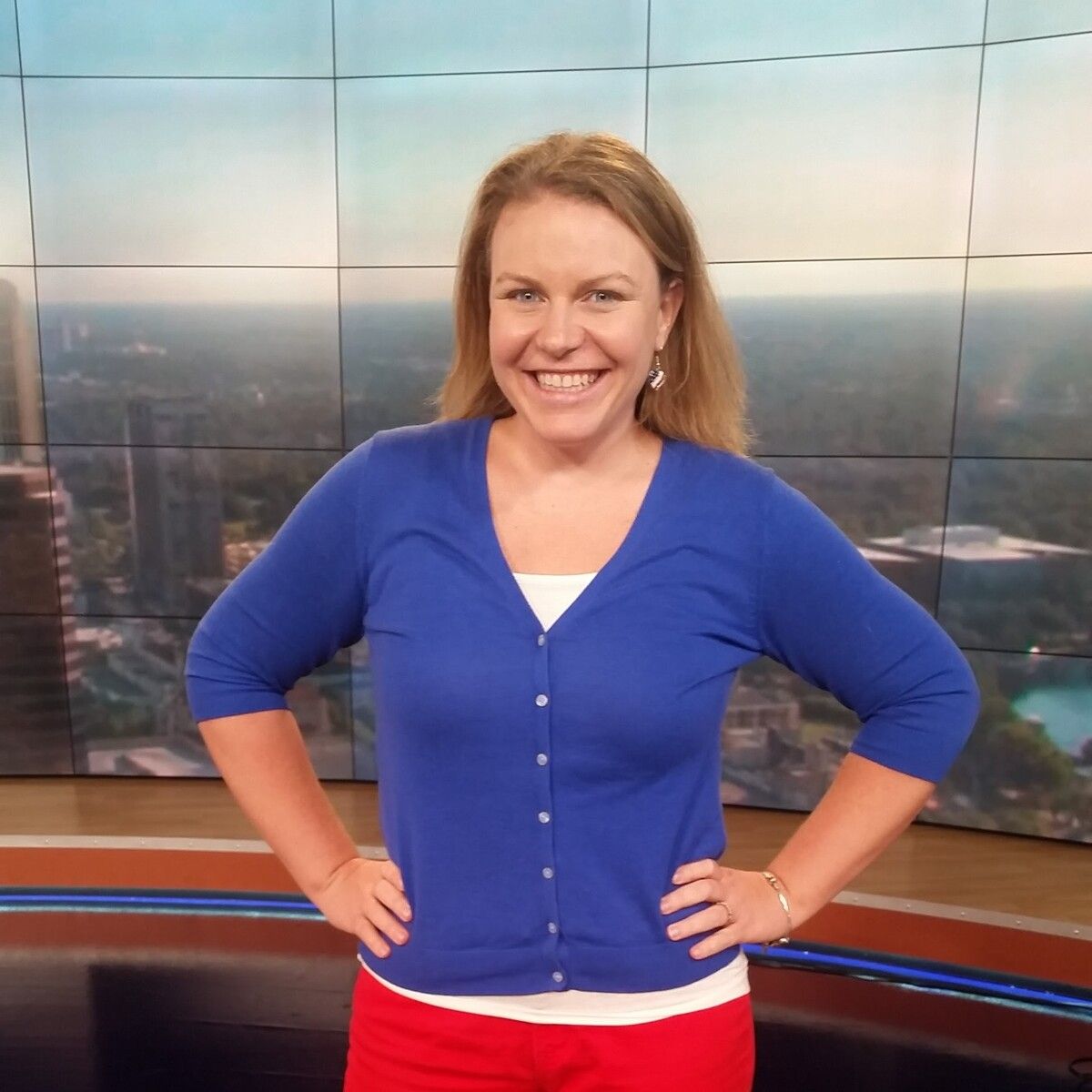
Three Questions With Valerie Boey Ramsey: A freelance TV news journalist who has been on the frontline of some of the biggest stories of the 21st century.

1.) After decades in local television news, what storytelling instincts have remained timeless no matter how much technology and media platforms have changed?
The same formula has stayed constant throughout the years. I always ask the people I interview who, what, where, why, when and how. Direct answers from interview subjects will never be replaced by AI, as most everyone has their unique story and only they can tell the narrative. Also going straight to the source works well. While at times it may not be convenient, finding that right person to interview is worth the time it takes.
2.) As someone who has covered courts, politics, crime, and community issues for decades, what’s the biggest misconception people have today about how local newsrooms actually operate?
I think the average person doesn’t realize how tight deadlines are and the stress journalists are under because of social media and competing stations that have news 24 hours a day. They’re also surprised to find out that there’s a story process, and we first need to get approval to do the story. Then even after collecting the facts and writing, we must go through another approval process. We can’t just say, “I’m covering this today and go out.”
3.) For PR professionals and brand storytellers trying to build trust today, what lessons from local journalism do you think are still essential, even outside of traditional newsrooms?
Taking the time to build sources and meeting people one on one is very important. Yet, I see introductions via text messages and emails to communicate. Yes, it’s fast and to the point and probably safer, but when first meeting a contact, picking up the phone is a great way to form a business relationship. Just understand the TV News world can be exhausting. Journalists don’t always have the time to chat on the phone or meet in person when they’re under deadline for another story. Following them on social media and commenting on stories helps. Understanding and patience also goes a long way. Even my close friends in the PR world may have to wait for a call back. Persistence goes a long way.
Valerie Boey Ramsey on LinkedIn and visit her website to see her latest projects with VBR Media.
TIPS & TRICKS
💡When it comes to story ideation, interview your frontline people regularly. Customer support staff, volunteers, sales teams, community managers, and field workers usually know the real stories before leadership does.
Until next time,
~ Amanda Green
Founder, InYourVoice MediaWorks, LLC