
So, Now You're A Journalist: Issue 2
Hello! If you’ve subscribed to this newsletter, then you know that the media industry is rapidly changing. So, Now You’re A Journalist is a once a month publication for marketers, creators, and PR specialists who want to understand what’s happening and how to tell better stories.
In this issue: We dive into the sudden explosion of newsletter launches (like this one) and whether the trend has any longevity. There’s a new survey on how much brands are spending on creators. And we’re giving a lesson on the 2026 definition of “storyteller.” Plus, scroll to the end for invaluable advice from a creator journalist who knows a thing or two about balancing quantity with quality storytelling.
Here we go!
EDITORIAL MEETS MARKETING
Inside the Inbox Economy: What’s Powering the Email Publishing Revival
Before algorithms decide what millions of people see each morning, Aryan Khuman co-founder of email marketing company House of Summary, presses send.
What lands in inboxes is Presidential Summary, a tightly edited email briefing of the most important political and global news of the day. “It’s like their personal newsletter curated just for them,” Khuman explains.
Once dismissed as crowded or outdated, email is quietly reclaiming its place as one of the most reliable ways to publish. As reach on social platforms grows increasingly unpredictable, publishers, brands, and marketers are returning to a channel that rewards the same principles journalism has relied on for decades: trust and editorial discipline.
From Side Project to 600,000 Subscribers
House of Summary launched Presidential Summary in October 2024. The idea is to replicate the daily intelligence briefings delivered to heads of state, but make them accessible to anyone overwhelmed by the modern news cycle.
“I am overwhelmed with news,” Khuman proclaimed. “There is just too much news to read every day.”
At the start of 2025, Presidential Summary and its sister publication Geopolitical Summary had a combined 6,000 subscribers. By the end of the year, after launching two more titles, Khuman says House of Summary had grown to approximately 600,000 subscribers.
Early growth came from Reddit, but by mid-2025, the dynamics had drastically changed.
“August 2025 was the tipping point,” he said. “We realized we could no longer rely on Google or social networks for subscriber acquisition.”
Search traffic declined as user behavior shifted toward AI platforms. Google’s rollout of AI-generated summaries reduced the need for users to click through to original sources.
“Clicks collapsed,” Khuman explains. “Users got answers without visiting websites at all.”
Rather than chasing platforms, House of Summary doubled down on the channel it controlled: email.
Ownership, Not Optimization
For Katy Widrick, owner of Make Media Over and a former journalist, email’s appeal has everything to do with ownership.
“If I had to pick one channel — just one — to build an audience and sustain a business, it would be email,” Widrick said. “Not because it’s flashy or because the metrics are perfect, but because it’s the only channel you actually own.”
Widrick spent nearly two decades in journalism before moving into marketing strategy. The transition, she said, clarified what really drives trust.
“The most valuable asset isn’t the platform or the algorithm,” she explained. “It’s the relationship with the person on the other side.”
Email, she argues, enforces discipline. That structure mirrors the constraints of legacy journalism, where space is limited, and credibility is nonnegotiable.
“What’s shifted in the past few years isn’t email itself,” Widrick reveals. “It’s that everyone else has finally realized what journalists always knew.”
Trust Built Through Editorial Choices
House of Summary also sees trust as the pathway to growth. “People no longer trust news outlets due to the prevalence of fake news,” Khuman said. Fact-checking and context are essential. “We make sure to curate news we believe will be important to readers,” he added, noting that important stories are often overshadowed by the dominant topic of the day.
Email allows that editorial control. Unlike social platforms, distribution is not subject to algorithms. “When the medium is email, you control customer data, distribution, and when the content is seen,” Aryan said.
3 Ways a Journalism Workflow Grows Your Business:
1.) It builds credibility before conversion. A journalism workflow prioritizes accuracy, context, and audience relevance, which builds trust at scale, leading to higher quality leads and warmer conversations.
2.) It creates consistency across every channel. Journalism workflows are built around beats so that every story fits into a larger narrative that can be shared on any platform. The result is stronger brand recognition and clearer positioning.
3.) It turns content into owned infrastructure. With a journalism workflow, content compounds over time, supporting SEO, PR, sales enablement, and thought leadership simultaneously. Your visibility remains strong and consistent.
Mechanics Behind the Momentum
From a technical perspective, experts say email has matured over the past few years.
“Email hasn’t really had a slump by any means,” said Natalie Hays, Senior Product Marketing Manager at Sinch Mailgun. “It’s had a consistent growth trajectory over time.” Mailgun is a delivery platform that supports more than 150,000 businesses, including eight of the ten largest tech companies in the world, and handles billions of messages annually.
Hays points out that targeting is key. “The right audience will definitely still subscribe to the right content,” she said. “That high intent leads to high engagement.” Deliverability is also crucial. “Sender reputation is the single most important factor in landing in the inbox.”
These factors may explain why publishers are choosing email over other channels. “Turning back to email after other methods of digital marketing failing is a pretty common occurrence,” Hays said.
Email as Infrastructure
Publishers, like Khuman’s House of Summary, see email as infrastructure. Unlike social platforms, where algorithms decide who sees a message and when, email gives creators direct control over distribution, timing, and audience relationships. The inbox belongs to the publisher, not a third-party algorithm.
As Hays puts it: “Email is a workhorse. Ignoring it is leaving money on the table.”
Even as the digital landscape becomes more competitive and inboxes feel crowded, email’s fundamentals allow it to be a stable, predictable medium, which is something publishers see as increasingly valuable today.
THE BUSINESS OF MEDIA
Creators Cash In: Ad Spend Growth Quadruples Traditional Media Rates
A new report shows just how big brands are betting on creator content. The Interactive Advertising Bureau estimates that U.S. creator ad spending hit about $37 billion last year, up 26% from 2024 and more than double from where it was just five years ago.
Nearly half of advertisers now call creator marketing a “must buy” in their media mix, ranking it just behind social media and paid search.
They’re spreading their dollars across all formats and follower sizes with the top three goals being building brand awareness, reaching new audiences, and enhancing brand reputation.
When it comes to performance, brands name “overall ROI” as their top KPI for judging creator campaign success. They also list ROI as their biggest hurdle to measuring success.
The Interactive Advertising Bureau (IAB), which published the report recognizes a disconnect in its analysis of the data. It states, “Until attribution models evolve, creator marketing’s true brand impact remains undervalued and disconnected from broader business outcomes.” The IAB has several recommendations, including looking beyond pure ROI.
From the Web
TRENDS & INSIGHTS
Year of the “Storyteller?”- What Does That Mean?
The Wall Street Journal recently reported a surge in companies hiring “storytellers” that went viral. Titles like narrative strategist, brand journalist, or corporate storyteller are popping up across industries. At first, it sounds like companies are finally recognizing that stories build loyalty, trust, and credibility. (Yay! Go us!)
But is that what’s actually happening? I suspect many companies have no idea what they’re hiring. And they’re setting themselves up for disappointment.
They’ll bring in storytellers expecting magical blogs and social media posts that drive immediate revenue. When that doesn’t happen, I predict these roles will be among the first to go. Within a year or two, we’ll see scores of content layoffs that storytellers are, quite frankly, used to at this point.
That’s because, when you scroll “storyteller” job listings, what you’ll find are actually just traditional marketing roles rebranded as something else in the same way that a decade ago everyone was looking for “unicorns” and “gurus.”
Don’t get me wrong, here. Storytellers are tremendous business assets. But let’s dig into what a storyteller actually does.
To start, storytelling is both an art and a science — but not a statistical science. We aren’t talking about metrics and clicks and views. It’s psychology.
Good storytelling requires an understanding of human attention, curiosity, and emotion. It simulates real, human, lived experiences in a way that triggers an emotional response. The audience gets a dopamine fix that makes them say “please, tell me more,” and an oxytocin flood that signals them to trust the storyteller. This is why stories are far more memorable than facts or bullet points.
And this isn’t just me, a storyteller, saying this because I have some kind of bias. Neuroscientists have proven this.
A 2009 study published in Psychological Science showed that when people read stories, their brains act as if they’re actually seeing and doing some of what’s described. As the story changes, different parts of the brain switch on, including regions that are normally active when people are doing things in real life. So, if the character in a story is running from a bear, the reader is running from a bear, too. Countless other studies also suggest similar connections between storytelling and emotion.
Psychologists call this effect “narrative transportation.” It’s the idea that people immerse themselves in a story, internalizing the message and even aligning their attitudes with the storyteller’s worldview. (I won’t get into narrative transportation here, but if you want to go down that rabbit hole with me, I suggest starting HERE).
Now let’s bring this back to the business world. Sometime in the Mad Men era of the mid 20th century, marketing flipped from being strictly persuasion via storytelling and reputation, and instead started borrowing from economics and science. Marketers learned to optimize.
Jump forward a few decades to the dot com era and suddenly clicks, impressions, and conversions became the metrics to track. Then social media sped everything up. By the time A.I. joined the scene a couple of years ago, data seemed to be the only thing that mattered. If it doesn’t show up in the analytics, it gets dismissed.
Oof!
Are we surprised that audiences began to disengage?
So, now we come full circle. We go back to leaning on storytellers the same way the cavemen did — pre Mad Men. Except, this time, we know about metrics and conversions. You can’t expect companies to value storytelling while they reward testing over judgment and analysis over understanding.
That disconnect is why I suspect many companies have no idea what they’re actually hiring for, and why so many of these roles are set up to fail. Storytellers will be brought in with the expectation that a few strong stories will magically drive immediate revenue. But that sort of influence takes time. It needs to build trust, familiarity, meaning… Storytelling doesn’t work at the point of transaction.
If companies truly want to hire storytellers, they must understand the craft. A storyteller is not a content producer. A storyteller is a cultural translator, a psychologist, an anthropologist, and an artist. Invest in these skills, and the result can be transformative in the long run.
We asked the pros what they think about the “storytelling” trend:
“Now the media landscape has shifted, and suddenly everyone realizes: we have no idea how to talk about ourselves. So they slap ‘storyteller’ on a job description, hire an ex-journalist, and expect magic.”
“Storytelling is not really about content alone. It is about having a clear narrative, and the ability to translate that narrative across the whole business. Leadership, strategy, culture, communication. All pointing in the same direction. When that clarity is missing, producing more content rarely helps.”
“Hiring a ‘Head of Storytelling’ won’t fix a lack of clarity. Because leaders are trying to tell the story instead of enabling it.”
“Brands that can tell compelling, authentic stories will rise above the rest. In a world drowning in AI-generated content, human-to-human storytelling will be the primary way to stand out.”
“As a storyteller, as well, this is my thoughts exactly. It's not a buzzword and you don't go to college for it.”
INTERVIEWS & CONVERSATIONS
Three Questions With Lauren Black: The Woman Who Has Met Every Star in Country Music

1.) You lead a fast-paced digital newsroom covering a genre where news often breaks first on social media. How do you decide when to publish quickly versus when to slow down, and what does that balance look like in practice inside your newsroom?
I’ve learned that publishing in real time seems to be the best approach. In today’s 24/7 news cycle, it can feel like if you don’t share news almost immediately, it risks getting lost. That said, we’re a very small team (just myself and one other full-time employee) so when multiple stories break at once, we have to be strategic.
We prioritize based on the severity of the story and the level of interest it’s likely to generate. For example, if news breaks about a household-name artist at the same time as an update involving an up-and-coming artist, it usually makes sense to publish the more high-profile story first, because it will likely reach a larger audience.
2.) As an editor, what kind of story excites you the most and what’s an immediate red flag, even if the topic is popular?
I’m most excited by stories where artists share something they haven’t told anyone else yet, especially when it happens organically and isn’t a pre-packaged “exclusive.” Those unplanned moments tend to feel the most genuine. For example, at the ACM Awards, a casual conversation I had with Blake Shelton led to him mentioning that he drove his own truck from Oklahoma to Texas for the show. It’s a small detail, but I found it interesting that an artist of his level chose to drive himself when he easily could have taken a private jet or hired a driver. We published the story on Country Now, and it was later picked up by several other outlets.
As for red flags, the biggest one for me is when a story breaks and relies heavily on unnamed “sources.” Ninety-nine percent of the time, we won’t report on stories that cite unknown sources because I don’t trust them. That said, there are rare exceptions. One example was when reports surfaced about Keith Urban and Nicole Kidman’s divorce. At that point, major outlets like TMZ, People, and Us Weekly had all reported it. If we hadn’t shared the story, we would have been lost in the shuffle. In situations like that, when a story is everywhere and widely corroborated, I’m more inclined to trust that the information is accurate and that the sources are likely planted.
3.) You’re both creating content and leading a newsroom that's creating content people trust. How do you balance being a creator with being a journalist, especially when trends and social metrics pull you in different directions?
This is such a great question and something I genuinely struggle with. Right now, it often feels like everything is negative, every story, every headline, and it’s hard not to compare your metrics to others when social platforms constantly reward the loudest or most sensational content.
That said, I’ve always prided myself on building Country Now as a trusted source that doesn’t rely on shock value or clickbait. Even when another outlet’s Facebook post performs better because of an overly sensational headline or an unflattering photo chosen just to grab attention, I can go to sleep at night knowing we didn’t compromise our integrity to get there.
TIPS & TRICKS
💡The news never sleeps, and neither should your SEO. Refresh older stories with updated facts, quotes, or stats to reclaim lost traffic.
Until next time,
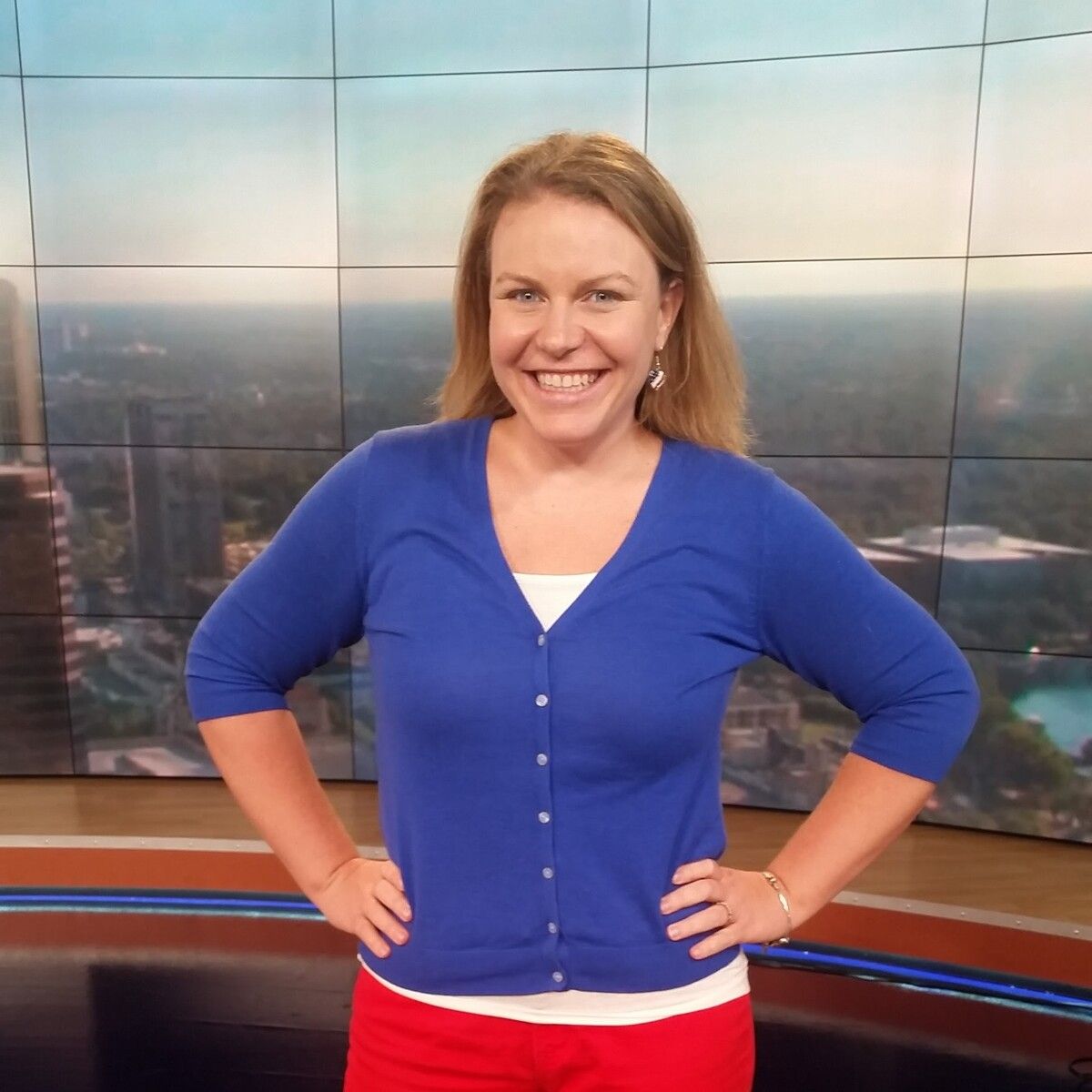
~ Amanda Green
Founder, InYourVoice MediaWorks, LLC