
So, Now You're A Journalist: Issue 5
Hello! If you’ve subscribed to this newsletter, then you know that the media industry is rapidly changing. So, Now You’re A Journalist is a once a month publication for marketers, communicators, and PR specialists who want to understand the media industry and how to tell better stories.
In this issue: We examine the PR response to the Cyclospora outbreak, look at a new survey of how much confidence people have in the news, explain how nonprofits can also operate as publishers, plus three questions with the newly formed Florida Weather Authority about their decision to launch on YouTube.
Here we go!
STORYTELLING CULTURE
Taylor Farms, Taco Bell, and the Great Lettuce Parasite PR Response Have we learned anything?
"Yesterday at Chuy's I asked for no lettuce with my tacos. I just don't have six weeks to spare right now," said April Ring, a consumer whose daily routine has been reshaped by the cyclosporiasis outbreak tied to lettuce. Chuy's has not been named in any recall or traceback connected to the parasite-caused illness that has sickened thousands of people across the U.S. this summer, yet consumers like Ring are stepping back, avoiding fresh leafy greens altogether until they feel confident the outbreak is contained. "I know the risk is minimal, but the impact would be devastating," Ring said.
The instinct to decline lettuce at a restaurant with no connection to any outbreak is an example of how quickly inconsistent communications can change public perception about a vegetable. Meghan Lee, a mother who skipped lettuce on her son's Chick-fil-A sandwich this week, said even though the outbreak has been linked to a specific farm, she still worries about contamination affecting other products or stores. "I've already had concerns about bagged lettuce because it seems to spoil so quickly, and this outbreak has made me question whether I want to continue buying it at all," she said. Companies up and down the supply chain have struggled to close the gap between what the official investigation shows and what the public now believes.
Cyclosporiasis Outbreak Facts — As of July 24, 2026
The Centers for Disease Control and Prevention, the Food and Drug Administration and health departments in dozens of states are investigating a multistate outbreak of cyclosporiasis, an intestinal illness caused by the parasite Cyclospora, linked to shredded iceberg lettuce.
The lettuce in question is linked to being supplied by Taylor Farms de México — one division of the larger Taylor Farms company — and served at Taco Bell.
The CDC reports more than 4,100 confirmed cases across 41 states, with more than 300 hospitalizations, up from 1,644 confirmed cases across five states a week earlier, along with more than 7,400 additional reported infections still awaiting lab confirmation. No deaths have been reported.
Taylor Farms recalled the implicated lettuce July 17 and has since temporarily shut down the central Mexico processing facility at the center of the traceback, according to Reuters.
The Corporate and Public Relations Response
When Taylor Farms recalled the implicated lettuce July 17, it specified that the product came only from its Mexico division and that no Taylor Farms-branded consumer products were involved. Two days later, the company issued another update: “Today, FDA apologized to us.” The statement said the company was “informed that FDA made a mistake, and this was a false positive.”
The company provided another update on July 24th, clarifying the actions it has taken since the outbreak began, including removing all potentially implicated product from the marketplace, issuing a broader recall out of an abundance of caution, and voluntarily suspending all iceberg lettuce sourcing and production from central Mexico.
That same day, July 24, FDA also issued a statement on its website: “On July 19, 2026, FDA provided an update about a false positive sample collected at the border. To clarify, this false-positive lab sample DOES NOT change the basis for FDA’s ongoing outbreak investigation or the overwhelming epidemiological data supporting the current voluntary recall by Taylor Farms. FDA’s traceback investigation and outbreak data continue to converge on shredded iceberg lettuce from Taylor Farms from growers in central Mexico. We encourage the public to continue to avoid all products listed in Taylor Farms’ voluntary recall.”
As of the morning of July 27, Taylor Farms has not issued any new updates on its website.
Why Fear Outran the Facts
The FDA July 24 statement clarifying the false positive statement from Taylor Farms names specific products, but precision only helps if a consumer can tell whether or not they’ve ever actually touched one of those products, and for many, that’s where confusion begins.
Taylor Farms doesn't only sell lettuce under its own name. The company supplies Walmart, Costco, Target, and Taco Bell, among other fast food chains, along with Sysco, the country's largest food service supplier. Most of that product reaches consumers under store brands or as an ingredient inside a fast food order, with no Taylor Farms name anywhere on the package, the menu board or the receipt. A shopper who bought a Walmart Marketside salad, or a customer who ordered tacos with lettuce at a dozen different restaurants this month, has no realistic way to know whether any of it came from the implicated Mexico facility.
When you can’t verify whether you personally were exposed, the only rational move is to assume you might have been, and to generalize that caution to anything that even remotely looks like the product in question, whether or not it has any connection to Taylor Farms at all. “For this reason, I am avoiding salads and a lot of produce all together. I am even avoiding berries because the last thing I read was that they needed to be soaked for 15 minutes and who has the time for that?” said Puja Rishi-Perez, consumer.
This generalization may explain why Chopt, a salad chain with no connection to Taylor Farms, saw foot traffic drop by 24% on July 18, according to Placer.ai data cited by CNN. Other restaurant chains including Chipotle, Cava, and Subway saw smaller declines in the same window, according to the CNN report.
“Out of an Abundance of Caution” Creating Confusion
Language added a second layer to the confusion. Taco Bell, which was among the first companies to react publicly, pulled lettuce from restaurants in the affected states on July 9, calling it an "abundance of caution" measure. Jack in the Box said it learned of the potential issue that same week, ahead of the FDA's announcement, and pulled lettuce from the Texas distribution center supplying its restaurants in Texas, Oklahoma and Louisiana. Sysco, the nation's largest food distributor, also acted before any formal recall notice was issued, as did Walmart and other retailers.
Vanessa Coffman, director of the Alliance to Stop Foodborne Illness at the nonprofit Stop Foodborne Illness, said in a 2024 Fast Company Article, that language like "voluntary recall" and "out of an abundance of caution" tends to minimize the problem rather than clarify it for consumers. It reads as an admission that no one, including the companies themselves, can fully rule out the risk. The result becomes people throwing food out unnecessarily because of a lack of consumer confidence.
“Meme” Culture Fueling the Fire
James E. Rogers, director of food safety at Consumer Reports, has said there's no data to support avoiding fruits and vegetables generally regarding this recall, but that message is competing with a louder cultural one: memes.
"So much about this case really rests on the confusion of it all," Molly McPherson, a crisis communications expert, told NBC News. Brands are stuck providing their corporate response to a public that’s already sharing TikToks and memes.
Merriam-Webster posted a joke online telling people to "avoid all salads, including the word." When Sweetgreen, a company with no connection to the illness, posted an unrelated menu promotion on X the same week, the replies filled with parasite jokes instead of orders.

Source: merriamwebster
"Nobody wants to be falsely blamed for something if they have nothing to do with it, but the public doesn't care about that, McPherson said. Being factually uninvolved, in other words, offers little protection once a story is moving through memes and social feeds rather than official channels.
Have We Learned Anything?
The pattern in Taylor Farms' response echoes the company's past outbreaks: acknowledge harm, cooperate with officials, minimize scope, express confidence in food safety systems. That approach has worked before for companies facing a single, verifiable fact the public can hold onto. It has been less effective this time.
That confusion is reflected in how consumers describe their own decisions. Ring, who has no reason to mistrust Chuy's, has stopped ordering lettuce there. Lee, who said she trusts reporting in The New York Times over information from federal agencies, said she plans to avoid lettuce for another month or two. Neither consumer expressed confusion about which company was named in the recall, Taylor Farms. Both said their decisions were driven by uncertainty about whether the outbreak's reach extends further than officials have confirmed.
Whether the gap between corporate communication and consumer understanding closes will depend on decisions still ahead, including whether retailers, restaurants, and regulators can find a clearer way to tell consumers what they’ve eaten.
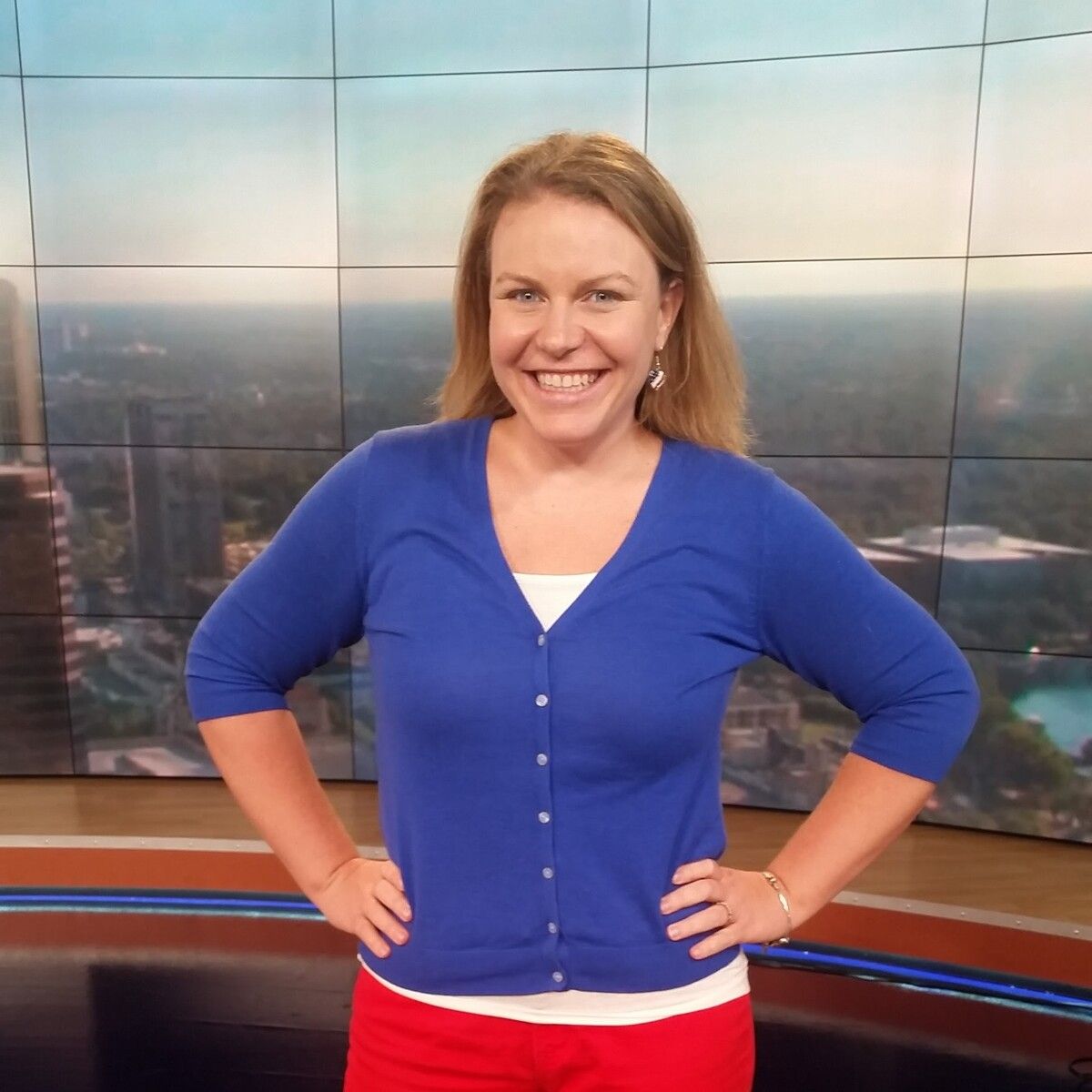
FOUNDER'S TAKE Amanda Green, InYourVoice MediaWorks
I spent over a decade in TV newsrooms watching what happens to a story when nobody truly “owns” it, and that's what I’m watching happen here, and why I chose to write a piece on it for this month’s newsletter.
By the time Merriam-Webster is joking about avoiding "the word salad," the story isn't Taylor Farms' anymore. The internet took over. It got sucked up by a narrative vacuum. Let’s face it, memes are much more interesting than a press release.
I constantly tell my clients that consistency is credibility. Taylor Farms' statements had a slightly different emphasis each time. There’s nothing there that’s untrue, necessarily. But strung together, it didn't read like one company telling one clear story. It read like a company reaching for whichever explanation might land.
Whether you're in a crisis or not, your story is going to travel somewhere you didn't anticipate: a review, a competitor's statement, someone's TikTok. You cannot control what others say about your company. What you can control is whether the version already out there is specific enough, and consistent enough, to survive being misrepresented or misunderstood by someone else.
That's the work I do, making sure a company has a real, specific story on the record, so that if someone goes looking for context or understanding, they’ll get it.
This is newsroom discipline, not PR spin. Report it once, get it right, and say it consistently.
Amanda Green is the founder of InYourVoice MediaWorks and creator of the Newsroom Narrative System. Learn more at inyourvoicemediaworks.com.
THE BUSINESS OF MEDIA
Trust in TV News and Newspapers Sits Near Record Lows
Americans' confidence in television news and newspapers remains near the lowest levels Gallup has recorded, the polling firm reported July 13.
Just 14% expressed "a great deal" or "quite a lot" of confidence in television news. Newspapers drew 17%. Both landed in the bottom third of 17 institutions measured, with television news next to last, ahead of only Congress.
Neither moved much from last year. More than half of respondents said they have very little confidence in television news, or none at all.
The two draw from opposite audiences. Newspapers fared better among college graduates. Television news fared better among adults without a college degree and in lower-income households.
Republicans reported less confidence than Democrats in both, but television news trailed further. Just 6% of Republicans expressed confidence in TV news, the lowest reading for any institution among any party group in the survey.
Overall confidence across the 14 institutions Gallup has tracked since 1993 averaged 27%.
Results are based on telephone interviews conducted June 1-15, 2026, with a random sample of 1,001 U.S. adults. The margin of sampling error is plus or minus 4 percentage points.
From the Web
EDITORIAL MEETS MARKETING
Every Non-Profit Needs to Be Operating as a Media Publisher
Picture a nonprofit that partners with local farms to rescue surplus produce and turn it into meals for people experiencing homelessness. On a Tuesday, a farm donates 400 pounds of tomatoes that would otherwise become trash. By Thursday, those tomatoes are in 600 meals served downtown.
Good story, right? The nonprofit’s comms coordinator pitches it to the local paper the way nonprofits have always done it. No response. The paper is down to two reporters covering a metro area that used to have twelve.
Now picture the same nonprofit treating itself as a publisher, rather than relying on someone else’s publication. It write the story itself: the farmer’s name, the pounds of produce, the number of meals, a photo from the kitchen. It goes into the newsletter its supporters already opted into. The farm reshares it to its own followers, who’ve never heard of the nonprofit before. A local business owner sees it and offers to donate refrigerated transport.
There’s no press release about it. No media pitch. No reporter Q&A. It started with the nonprofit deciding it didn’t need to rely on someone else to tell its own true story well.
The Old Model is Running Out of Runway
Traditional earned media depended on a newsroom infrastructure that's been shrinking for nearly two decades. According to the Pew Research Center, U.S. newsroom employment fell 26% between 2008 and 2020, driven almost entirely by losses at newspapers (See our article on shadow newsrooms and news deserts). That decline hasn't leveled off. 2026 is on pace to be a worse year for journalism layoffs than 2025, with cuts already hitting the Washington Post, Politico, Vox Media, and the Wall Street Journal this year.
At the same time, the social platforms nonprofits leaned on to fill that gap are handing back less for free. Hootsuite and Addictive Digital research shows Facebook Page organic reach now averages roughly 2.6%-5.9% of followers per post, down from double digits a decade ago; Instagram organic reach dropped another 12% between 2024 and 2025.
And trust itself is fragmenting. The 2026 Edelman Trust Barometer, surveying nearly 34,000 people across 28 countries, found seven in ten now hesitant to trust anyone with different values or information sources than their own. In that environment, a story filtered through an algorithm or a stranger's byline carries less weight than one an organization tells directly, credibly, and consistently.
Others Doing This Well
charity: water built a $260-million-plus fundraising engine largely on owned storytelling. The organization publishes original beneficiary stories on its own site and directly to donors.
The Trace, an independent nonprofit newsroom funded by Bloomberg Philanthropies to cover gun violence, is a funder choosing to build its own dedicated publishing operation rather than relying on pitching outlets that may or may not cover the issue.
The Institute for Nonprofit News now counts dozens of nonprofit newsrooms as members, each built on the premise that an owned editorial operation is more durable than dependence on shrinking commercial press capacity.
Media Relations Still Plays a Role
None of this replaces media relations or the effort that goes into traditional public relations campaigns. Earned coverage still carries third-party credibility no owned channel can fully replicate, plus it has tremendous benefits for improving AI visibility. (See our report on LLMs and PR). But it can no longer be the foundation. Those 400 pounds of tomatoes are a story worth telling, regardless of what the local reporters are covering or what’s leading the local 6:00 news. Those tomatoes need an organization willing to publish the story itself.
It's a Newsroom, Not a Feed
Publishing a story alone doesn't mean an organization is running a newsroom. It needs to publish consistently, with structure behind it. (This distinction is the whole premise behind the Newsroom Narrative System).
It starts with diagnosis: what is the organization trying to achieve and who is it trying to reach? This is the same groundwork a newsroom does before assigning a story on a busy news day.
From there, it takes real roles, even at small scale. Someone has to hold the editorial standard the way an editor-in-chief would. Someone has to own the pipeline so stories don't stall between "good idea" and "published." Someone has to lead individual stories through to completion. At a large organization that might be four separate people. At a two-person shop, it might be one person wearing all four hats, but the roles still have to exist.
And it needs a rhythm. A single viral post about 400 pounds of tomatoes is a nice moment. A newsroom turns that into the 40th story in a pipeline that runs into the next quarter. Your content pillars run more like newspaper “beats” than concepts for themes, and you operate with a standing editorial calendar instead of a scramble before the next campaign.
That infrastructure is what separates an organization that occasionally publishes something good from one that has genuinely become its own media outlet. Without it, the tomatoes get one post and then silence until the next campaign. With it, every story builds on the last one. There’s compounding trust occurring with each story, all running on a system that keeps working without reliance on an unreliable press.
INTERVIEWS & CONVERSATIONS
Three Questions With The Florida Weather Authority: Three of Central Florida’s most trusted certified meteorologists take their expertise directly to the people of Florida.

1.) After years in television, what convinced you that this was the right time to build your own media company instead of keeping the focus on traditional broadcasting?
Tom: Honestly, the timing chose us as much as we chose it. All three of us are no longer working in local television - in my case because I took an early retirement incentive in June of 2024. Like a lot of people who’ve spent their careers in a field they love, we discovered that stepping away from the work and stepping away from the passion are two very different things.
Television taught me an enormous amount about communicating weather clearly and calmly under pressure. But it also has real limitations. There were always things I wanted to say, context I wanted to give, conversations I wanted to have that simply don’t fit the format. Florida Weather Authority is the chance to finally have those conversations.
And frankly, the platform exists now in a way it simply didn’t ten years ago. YouTube gives three veteran meteorologists a direct relationship with an audience without a network, a station, or an ownership group in between. That’s a remarkable thing. We’d be foolish not to take advantage of it.
2.) What's different about building an audience you own versus serving one that's provided by a TV station?
Rob: The biggest difference is that we get to decide who our audience is and how we want to serve that audience. In traditional television, we are told that our audience is 25-54 years old, lives in very specific areas, and understands science and english on about a 6th grade level on average. Just like Tom, there were always things I wanted to say, context I wanted to give, and conversations I wanted to have but did not want to be told "our audience doesn't care about that." In this new, digital media format, if I want to get into the real weather geeky stuff, I can. If I want to talk about something interesting happening outside of our immediate area, I can. That content may not appeal to everyone. But, at least I know that the people watching are actually interested in what I want to say, rather than what I am told they want to hear. It's very freeing, and frankly more rewarding to build your own audience rather than have one that is predetermined.
3.) It's been about one week since your official launch of Florida Weather Authority. What has already surprised you?
Amy: I was surprised by how quickly people started subscribing and telling us how much they appreciated our approach. Our goal was to get 500 subscribers by the end of the year, and we had 500 subscribers after just a few hours of announcing the YouTube channel. We knew for a long time that this was something missing in our area and yet, it's still a bit of a surprise when your suspicions are validated.
Real meteorologists. Real forecasts. Florida Weather Authority is a Florida-based team of dual-certified Meteorologists sharing clear and credible weather forecasts you can trust. Find them on YouTube or floridaweatherauthority.com
TIPS & TRICKS
💡Every story pitch gets a "so what" test: if you can't answer it in five words, it's not a story yet, it's a topic.
Until next time,
~ Amanda Green
Founder, InYourVoice MediaWorks, LLC
1
2